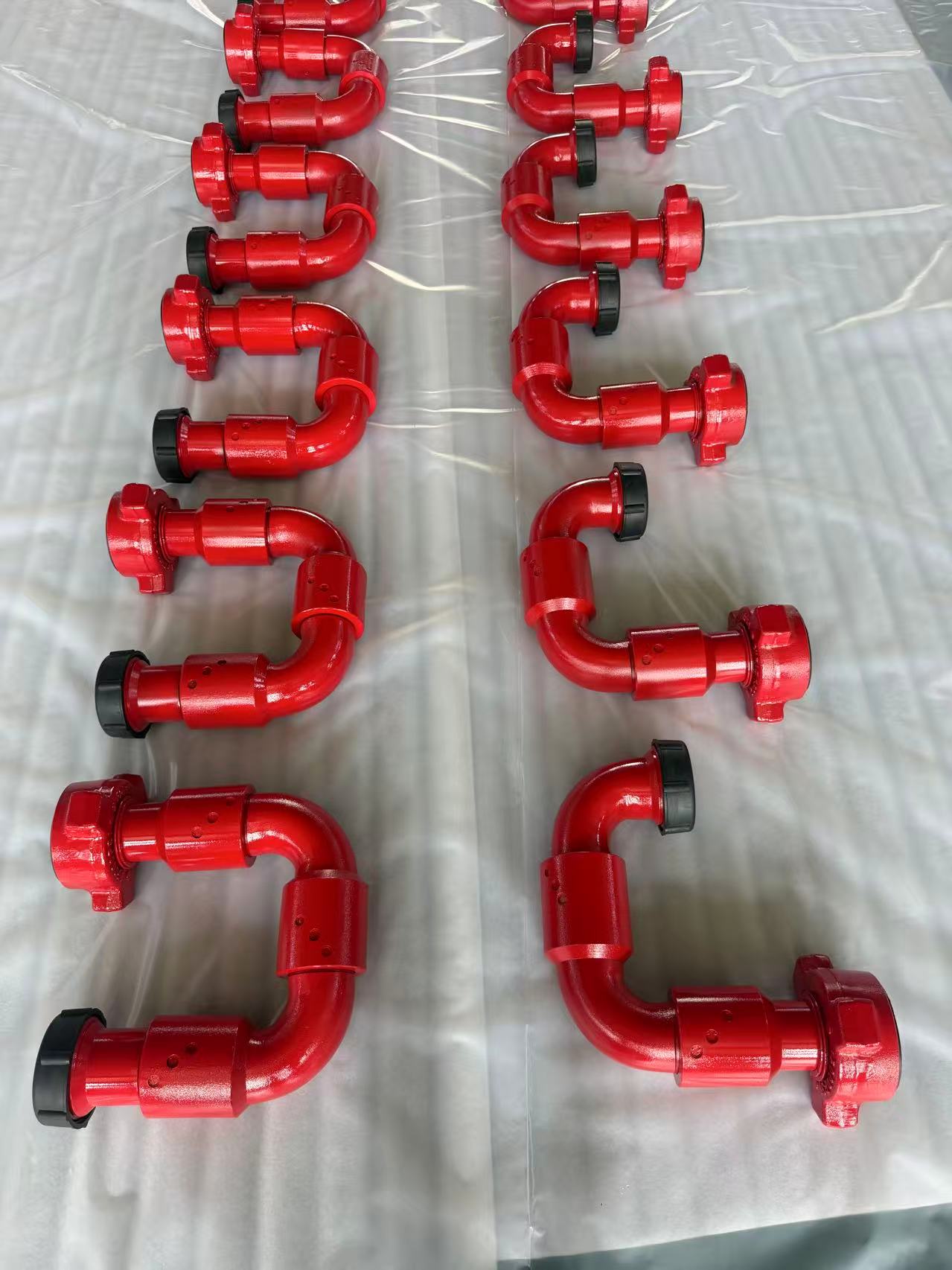
Frac iron carries treating fluid into the well during pumping, while flowback iron carries fluid back out of the well after the job, usually for a longer period and along a different route to separation or storage. The components are often from the same family, pup joints, plug valves, and swivel joints in 2-inch FIG 1502, 10,000 PSI service, but the layout, isolation points, and inspection priorities differ because the direction, duration, and purpose of the flow differ.
The same iron family, a different job
Walk a location after a frac job and the iron on the ground can look familiar: the same pup joints, plug valves, and swivel joints, joined by the same FIG 1502 wing unions. That familiarity is real, and it is also the easiest place to make a wrong assumption. The difference between frac iron and flowback iron is not usually the catalog the pieces come from. It is the job each assembled line is asked to do.
Frac iron is built for the pumping phase. Fluid travels from the pumps, through a manifold, along the treating line, and into the wellhead, in a controlled sequence of stages. Flowback iron is built for what comes after: fluid returning from the well, routed away from the wellhead toward separation, storage, or disposal, under the site procedure for that phase. Same building blocks, opposite direction, different destination, and a different set of things to get right.
How flow direction changes the line
- Direction of flow: on a frac spread, flow runs from pumps to wellhead. On a flowback spread, flow runs from the wellhead outward, so the line is planned from the wellhead toward its endpoint, not from the pumps inward.
- Endpoints: a frac line ends at the wellhead. A flowback line must reach separation equipment, tanks, or another approved destination, which can mean a longer route, more direction changes, and more swivel joints to get there.
- Isolation points: frac isolation is often about taking a pump offline without stopping the spread. Flowback isolation is often about shutting in or diverting returning flow, so plug valves need to sit where the crew can reach and operate them safely during that phase.
- Duration: frac pumping runs stage by stage, while flowback can continue well after pumping stops. A line that is only needed for a stage and a line that must stay in place through an extended flowback period are planned, supported, and inspected with different expectations.
- What the crew watches: during pumping, attention centers on treating pressure and the integrity of the line into the well. During flowback, attention shifts to the returning stream, the route to separation, and whether every joint, valve, and support along that route is holding up over time.
What to recheck when iron changes roles
Iron that served during pumping is sometimes reused for flowback, and that reuse deserves its own inspection rather than a blanket assumption that it is still fit. Check union threads and sealing surfaces for damage from make-up and break-out, confirm the bore is clear of sand, scale, and debris left by the previous phase, and cycle plug valves through their full range before the line goes back into service. Check swivel joints for smooth rotation and for weep around the packing area, and confirm that every piece still matches the line it is joining in size, union figure, end orientation, and stamped working pressure.
The lowest-rated component rule applies exactly as it does on a frac spread: the lowest-rated piece in the assembled line sets the limit for the whole line, wherever it sits. A flowback route that adds joints, valves, or a longer run also adds places where a mismatch can hide, so the check has to cover the new route as a whole, not just the pieces that were already on location.
Planning a flowback line from the start
The simplest way to avoid trouble is to plan the flowback route before pumping ends, rather than improvising it with whatever iron is left on the ground. Note where the line must go, where isolation valves must sit, where supports and restraints are needed, and which lengths will close the measured gaps. Keeping a mix of 4 ft, 6 ft, and 10 ft pup joints on location gives the crew room to adjust when the route changes, and staging a spare valve and a spare pup joint near the line shortens any swap the flowback phase requires.
When sourcing iron, say which phase it is for. A supplier who knows whether the line is for frac service, flowback service, or both can help confirm that the lengths, styles, and quantities match the route and isolation plan, and can confirm what inspection and test documentation is available for the specific items. That conversation is short, and it prevents the most common flowback mistake: a line assembled from good pieces that were never planned as a line.
Where Sterling can help
Sterling Wellhead stocks new 2-inch FIG 1502, 10,000 PSI flow iron in Jourdanton, Texas 78026: the T000856 plug valve, 4 ft, 6 ft, and 10 ft pup joints (T000864, T000866, T000855), and Style 10 and Style 50 swivel joints (T000620, T000693). Whether you are building a frac line, a flowback line, or both, send the lengths, styles, and quantities in your planned layout and our team will confirm the configuration by drawing number. Sterling is RFQ-only: contact sales@sterlingwellhead.com or +1 (512) 373-0384.
Frequently asked questions
Can the same flow iron be used for frac and flowback service?+
Often yes, when size, union figure, end orientation, and stamped working pressure all match the new line and each piece passes inspection for the new role. Reuse is a decision for the site procedure, not an automatic carryover: the new route, isolation points, and supports must be checked as a complete line.
Why does flowback iron need its own layout plan?+
Because the route, endpoints, and duration are different. Flowback runs from the wellhead toward separation or storage, can continue well after pumping stops, and needs isolation valves placed for that phase, so a frac layout copied unchanged will rarely fit it.
What should I tell a supplier when sourcing iron for flowback?+
State which phase the line is for, the route and endpoints it must reach, the lengths, styles, and quantities you need, where isolation valves must sit, and what inspection and test documentation you require for the specific items.