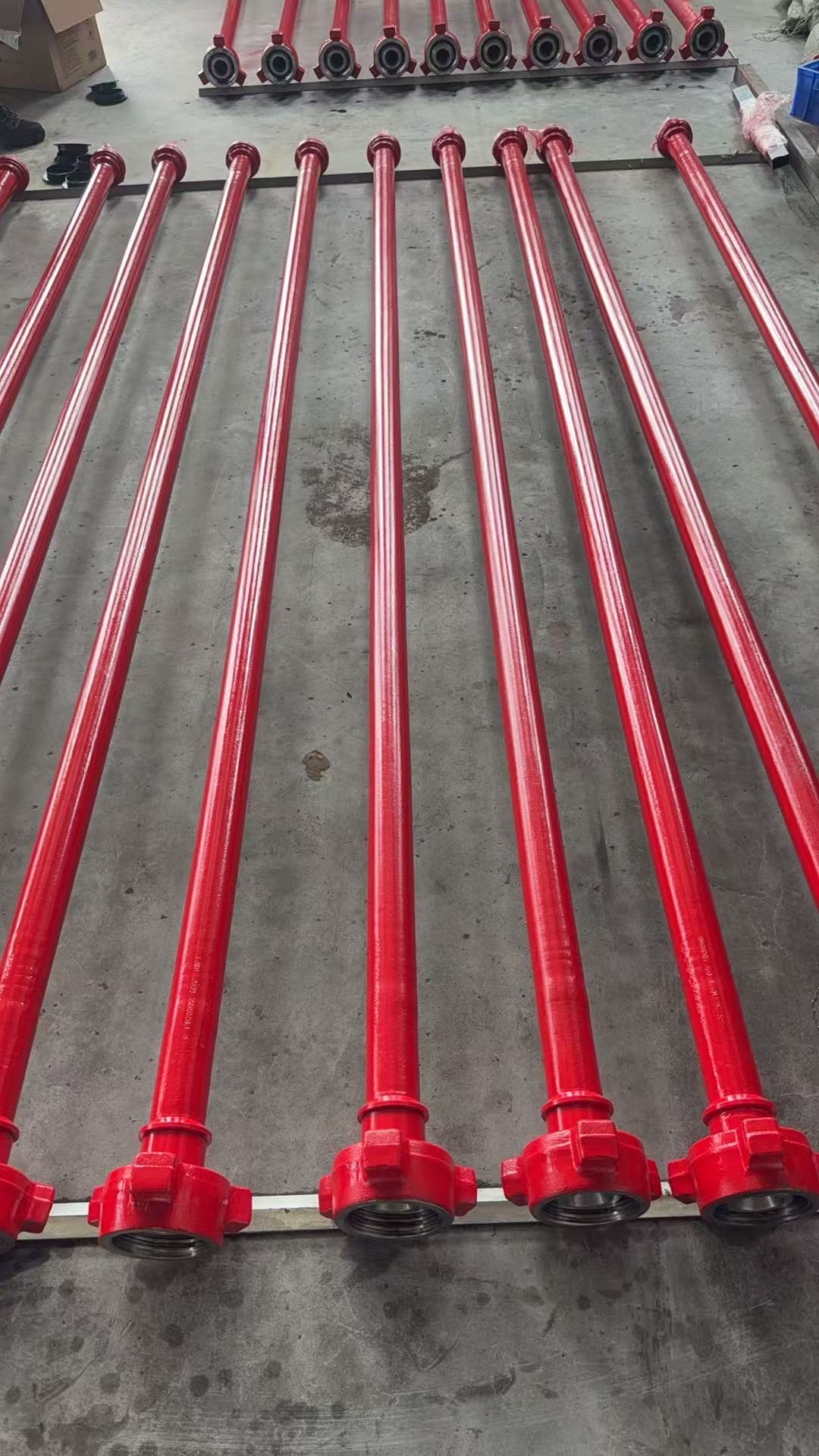
Flow iron lasts longest when it is stored clean, dry, and off the ground, with the union ends capped and the sealing surfaces protected — and when it is hauled with the load secured so pieces cannot shift, bang together, or take a hit. The damage that shortens a piece's life rarely comes from the job itself; it comes from a dented union, a scored sealing surface, or water left inside between jobs. A short routine at the end of each job — clean, drain, cap, rack, and log — is what keeps iron ready for the next call-out.
Why storage and transport are part of the iron's life
Flow iron spends most of its life off the line: in the yard between jobs, on a truck between sites, or racked while a spread waits. The pressure test, the rating, and the service on the job get most of the attention, but the condition of a piece is decided in those in-between hours — a union dropped on concrete, a sealing surface nicked by a loose piece in the bed, water left inside a pup joint for a month.
None of that damage shows up as a crack or a broken part. It shows up later, as a union that will not seal, a swivel that weeps, or a piece that fails its next pressure test. That is why storage and transport are not housekeeping; they are part of looking after pressure equipment, and the habits are simple enough to become routine.
Storing flow iron between jobs
- Rack it off the ground: set iron on racks, dunnage, or pallets so it does not sit in mud or standing water, and so a forklift can pick it without dragging it.
- Cap the union ends: keep the sealing surfaces and threads covered with caps or guards so dirt, grit, and impacts cannot reach them. A nicked sealing surface is the most common reason a union will not seal.
- Clean and drain before racking: wash off mud and flowback residue, drain each piece fully, and let it dry. Water left inside a pup joint or a swivel is what starts corrosion while the iron waits.
- Keep swivel joints unloaded: store swivels so nothing bears on them and the packing is not compressed or twisted — a swivel left with weight on it can come back stiff or leaking.
- Separate sizes and figures: rack 2-inch FIG 1502 iron by size and union figure so the right pieces are picked first, and a wrong-figure union is not forced onto a line in a hurry.
- Tag what you store: note the piece, its drawing number, its last test date, and anything that needs attention before the next job, and keep the tag with the piece — not in a separate notebook.
Loading and hauling it to the next site
Loading is where iron takes the most knocks. Load piece by piece, heaviest and longest first, with dunnage between layers so metal does not rest on metal, and never drop a piece onto the bed or let one roll free. Keep union ends capped while loading — a cap costs nothing next to a union that has to be cut out and replaced.
Secure the load so nothing can shift: tie-downs or chains rated for the weight, placed so the load is held in every direction, and re-check them after the first few miles, when a load settles and straps go slack. On a flatbed, keep the iron low and centered, with nothing overhanging the sides that a turn can throw, and protect the load from road spray and rain where it matters — covers are cheap, and a sealing surface full of grit is not.
What to check before the iron goes back on the line
Before iron leaves the yard, walk the rack: look at each union end for dents and scoring, check threads for damage, and make sure caps are on and the piece is dry inside. A piece that looks fine from the truck can still carry a damaged sealing surface, and that is the check that matters most.
Check swivels by hand — they should turn smoothly, with no stiffness, grinding, or side play — and cycle plug valves through their full travel to confirm they move freely and seat properly. If anything is stiff, weeping, or damaged, set the piece aside for service rather than sending it out and finding out on the line. And confirm the piece's last pressure test record is still current for the job it is going to; storage does not extend a test, and iron whose test date has passed needs to be tested again before it goes into service.
Where Sterling can help
Sterling Wellhead stocks new 2-inch FIG 1502, 10,000 PSI flow iron in Jourdanton, Texas 78026, including the T000856 plug valve, 4 ft, 6 ft, and 10 ft pup joints (T000864, T000866, T000855), and Style 10 and Style 50 swivel joints (T000620, T000693). Send the line list, the quantities and drawing numbers, the delivery location, and the required-on-site date, and ask for the pressure test documentation with your RFQ — our team will confirm the configuration by drawing number. Sterling is RFQ-only: contact sales@sterlingwellhead.com or +1 (512) 373-0384.
Frequently asked questions
Can flow iron be stored outside?+
Yes, if it is stored properly: off the ground on racks or dunnage, with the union ends capped, the pieces drained and dry, and a cover over the rack where rain and dust are a problem. What damages iron outdoors is not the air — it is standing water, mud, and unprotected sealing surfaces, so the routine matters more than the roof.
Do the union ends need protection during transport?+
Yes. Keep caps or guards on the union ends from the yard to the site, and do not load iron so that pieces can bang together or roll. A dented or scored sealing surface may not seal when the union is made up, and a damaged union can take a piece out of service.
How should swivel joints be stored between jobs?+
Store them clean, dry, and unloaded — nothing bearing on the swivel, and the packing not compressed or twisted — with the ends capped and the piece tagged with its last test date. Before the next job, turn each swivel by hand: it should move smoothly, with no stiffness, grinding, or side play.