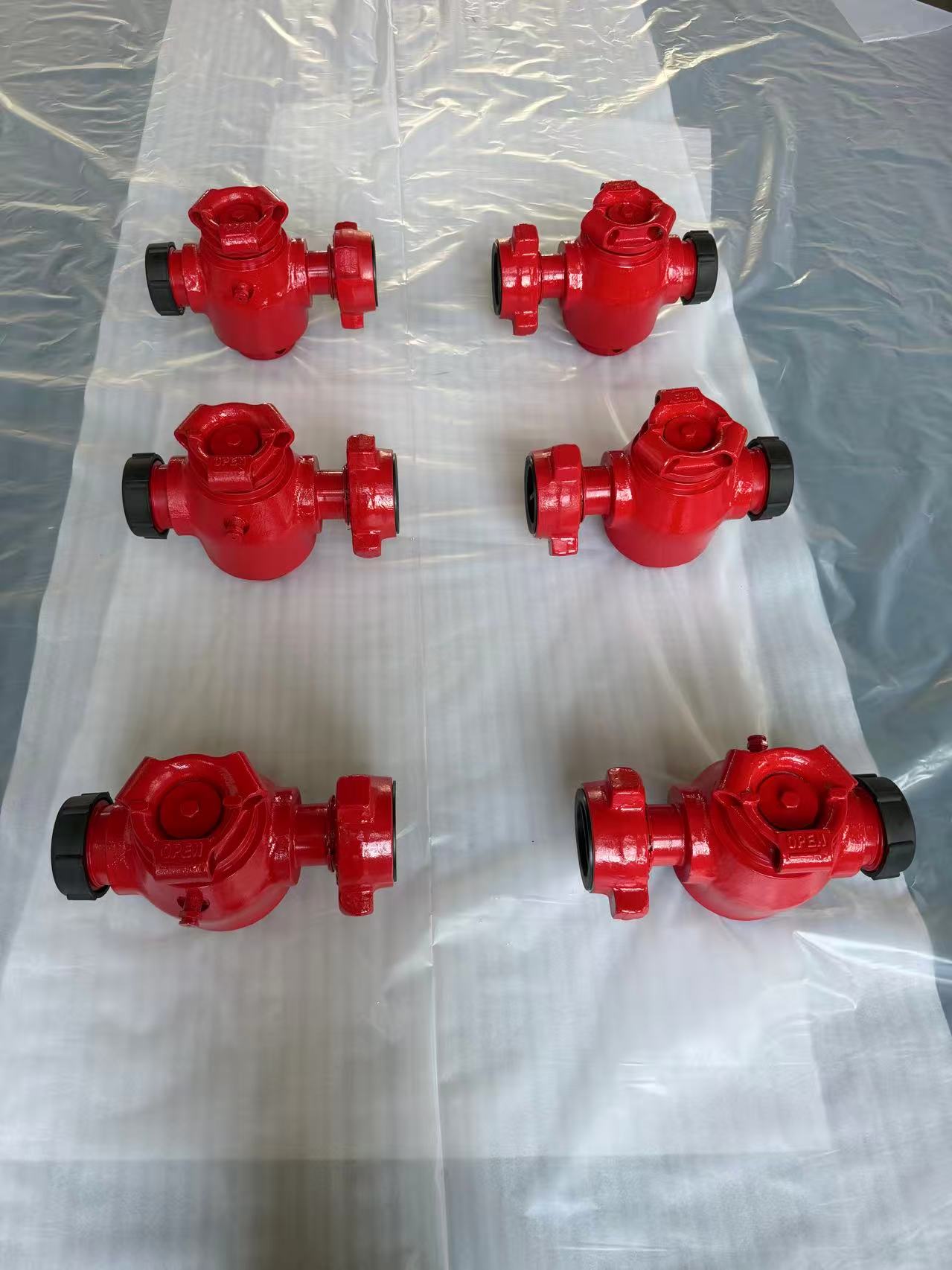
A plug valve stays reliable when three habits are kept up: grease it on the schedule your site procedure sets, cycle it through its full range so stiffness or leakage shows up before the job, and store it capped, clean, and protected between jobs. Most valve trouble on a treating line is not sudden; it is the slow result of skipped greasing, a valve left in one position for months, or a sealing face damaged during storage or transport.
What a plug valve does on a treating line
A plug valve is the isolation point on a treating line. Turn the handle and the plug inside the body rotates to open or close the bore, letting the crew shut off flow to a pump, a section of line, or a wellhead connection without breaking the line apart. On a frac spread, plug valves sit where isolation matters most: at pump discharge lines, at the manifold, and wherever a section may need to be taken offline while the rest of the spread keeps working.
That job makes the valve a safety device as much as a flow device. A valve that does not close fully, or that leaks past its seats when closed, cannot be trusted to isolate a section, and a valve that will not move at all cannot be operated when it is needed. The maintenance routine below exists for one reason: so that when the crew reaches for the handle, the valve does what the handle position promises.
Greasing: keeping the seal working
- Why grease matters: grease lubricates the plug as it turns and helps the plug seal against the body. A dry valve turns stiffly, wears faster, and is harder to operate under pressure, which tempts crews to force a handle that should move freely.
- Follow the site procedure for grease type and interval: use the grease and the schedule your site procedure or the valve guidance for your inventory specifies, and do not substitute an unknown product. A regular, moderate schedule beats occasional heavy greasing.
- Grease before rig-up, not only during the job: a valve that has sat in storage deserves grease before it goes back into service, and a valve that has pumped abrasive fluid deserves attention after the job, once it has been cleaned and inspected.
- Check the grease fittings: a damaged or clogged fitting means grease never reaches the plug, no matter how much is pumped. Service or replace a suspect fitting under the site procedure rather than forcing grease past it.
- Grease is maintenance, not repair: if a valve still leaks past its seats or still turns stiffly after proper greasing, it has a problem greasing cannot fix. Tag it out of service under the site procedure for assessment instead of sending it back into the line.
Cycling: the check that finds trouble early
Cycling means moving the valve through its full range of travel, from fully open to fully closed and back, and paying attention to how it feels. The handle should move smoothly, reach a positive stop at each end, and leave the valve clearly open or clearly closed. Stiffness, grinding, a handle that stops short of its stop, or a valve that drifts from its set position are all findings, not quirks to work around.
Cycle the valve before the job, not during a moment when isolation is already needed. While it is cycled, check for leakage past the seats when the valve is closed, following the site procedure for how that check is done. A small leak found on the yard is a valve to set aside; the same leak found mid-stage is a job problem.
Cycle spare valves too. A valve that sits in one position through months of storage can seize just as surely as a valve in daily service, and a spare that has never been cycled since it arrived is an unknown, not a backup. Log the result of each check with the valve's identification, so the next crew knows what was verified and when.
Storage between jobs: protecting the valve you will need next
Much of the damage a valve arrives with happens before the job starts. Clean sand, mud, and abrasive residue off the valve after break-out, and keep the union end protectors and caps on until rig-up, so threads and sealing faces stay out of the dirt on location and in the yard. Store valves covered and dry, where they will not be knocked, buried under other iron, or run over, and keep the stamped figure, size, and drawing number visible so a valve can be identified without guesswork.
Storage is also where discipline about suspect valves pays off. A valve tagged out for stiffness, leakage, or a damaged fitting stays tagged until it has been assessed under the site procedure; a tag removed casually in the yard sends an unverified valve back into a line that depends on it. When the next job calls, the valves that come off the shelf should be the ones that were greased, cycled, and checked on the way in, not the ones that were simply put down.
Where Sterling can help
Sterling Wellhead stocks new 2-inch FIG 1502, 10,000 PSI flow iron in Jourdanton, Texas 78026: the T000856 plug valve, 4 ft, 6 ft, and 10 ft pup joints (T000864, T000866, T000855), and Style 10 and Style 50 swivel joints (T000620, T000693). Every piece carries the stamped figure, size, and drawing number your crew needs to verify a match before rig-up. Sterling is RFQ-only: contact sales@sterlingwellhead.com or +1 (512) 373-0384 with your required lengths, styles, and quantities.
Frequently asked questions
How often should a plug valve be greased?+
On the interval your site procedure or the valve guidance for your inventory specifies, and at minimum before rig-up after storage and after jobs where the valve saw abrasive service. A consistent schedule matters more than occasional heavy greasing, and a valve that has sat unused should always be greased before it goes back into service.
What should I do if a valve is stiff or leaks past its seats?+
Do not force the handle. Re-grease it under the site procedure and cycle it through its full range; if it is still stiff or still leaks, remove it from service under the site procedure for assessment. A valve that will not close fully cannot be trusted to isolate a section.
Can a valve stored for months go straight back into service?+
No. Inspect the threads and sealing faces, grease it, cycle it through its full range, and confirm a positive handle stop and a sound seat seal under the site procedure before rig-up. A valve that has sat in one position needs that check precisely because it has not been moving.