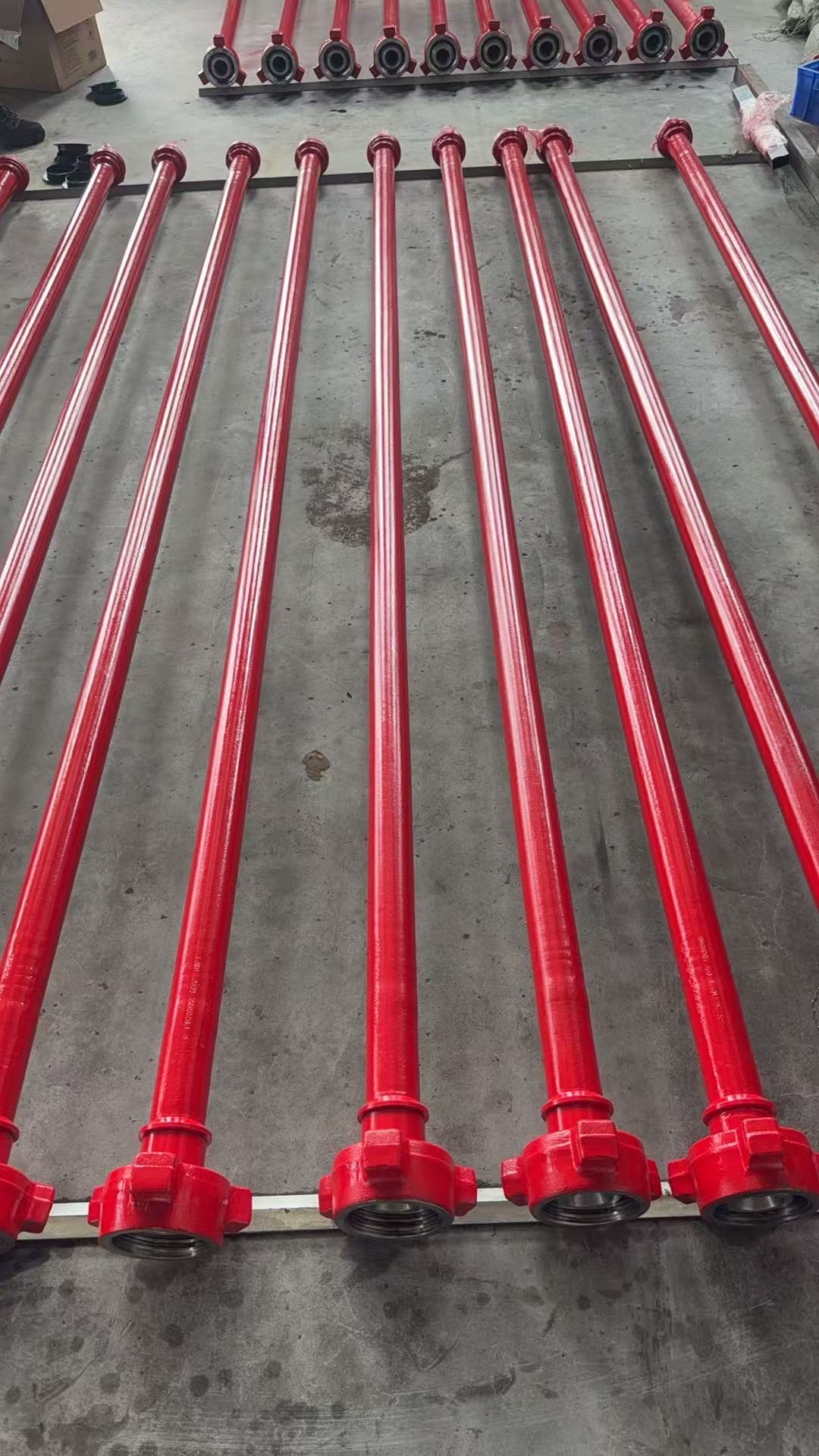
A wing union is only as safe as its last make-up: confirm the figure, size, and orientation match, inspect the threads and sealing surfaces before assembly, and fit restraints and whip checks before the line is pressurized. Restraints limit what happens if a connection separates, but they never make up for a damaged union, and no union should ever be hammered or tightened while the line is under pressure.
What a wing union is, and why it draws attention
A wing union, often called a hammer union, joins two pieces of flow iron with a threaded nut fitted with wings, or lugs, that are struck with a hammer to make up and break out the connection. You will find wing unions on pup joints, plug valves, swivel joints, and the other components that make up a high-pressure treating line, and they are one of the reasons a flow line can be rigged up, changed, and broken down in the field without special shop tools.
That hand-made character is both the advantage and the risk. A wing union goes together quickly and adapts to the layout on location, but the quality of each connection depends on the condition of the threads and sealing surfaces, the care taken during make-up, and whether the crew follows the site procedure for that job. No single component in a treating line gets handled as often, or inspected as casually, as a wing union, which is why it deserves its own safety routine.
Before make-up: inspect every union
- Figure, size, and orientation must match: confirm the stamped union figure, the nominal size, and the male and female orientation at each make-up. A union that does not match should never be forced together, and an adapter used to bridge a mismatch needs to be a deliberate, rated part of the plan, not an improvisation.
- Threads: look for stripped, rolled, crossed, or galled threads, and for dirt, sand, or debris packed into the thread. Clean the threads before make-up; grit in the thread damages the connection a little more every time it is used.
- Sealing surfaces: check the seal faces for pitting, scoring, dents, and uneven wear. A damaged sealing face will not seal reliably no matter how hard the nut is hammered, and it is one of the most common reasons a union weeps once pressure is applied.
- Wing nut and lugs: check for cracked, bent, or heavily worn lugs. Worn lugs give the hammer less to bite on, make a proper make-up harder to achieve, and can break under the hammer. A suspect nut comes out of service under the site procedure, not back into the line.
- Cleanliness and protection: keep end protectors and caps on until rig-up, and keep threads and seal faces out of the dirt on location. Much of the damage a union arrives with happens during storage and transport, before the job starts.
- Pressure rating: every piece in the assembled line, including every union, must meet the pressure envelope of the job plan. The lowest-rated component in the line sets the limit for the whole line, wherever it sits.
Restraints and whip checks: what they are for
A restraint is an arrangement that limits how far a line or a hose end can move if a connection separates under pressure. A whip check is one common form of it: a short cable or sling looped across a connection or a hose end and anchored so that a separated end is held back instead of whipping freely across the location. Both are fitted before the line is pressurized, as part of the site safety plan, not added after a problem appears.
Fit and inspect them with the same seriousness as the union itself. A whip check that is frayed, kinked, fitted with damaged end hardware, or anchored to the wrong point gives false confidence rather than real protection. And keep their purpose in perspective: a restraint limits the consequence of a separation. It does not fix a bad union, and it is never a reason to put a damaged component back into service.
During the job: habits that keep a union safe
Once the line is pressurized, keep people clear of the line path, especially at unions and at points where the line changes direction. Walk the line before pressure goes on and look for weeping unions, misaligned joints, and restraints that have shifted during rig-up. A small weep found early, while the line can still be safely isolated, is a far smaller problem than the same weep discovered mid-stage.
If a union weeps, leaks, moves, or shows a damaged restraint during the job, stop and follow the site procedure: isolate and depressurize the section safely and let qualified personnel assess the piece. Never hammer or tighten a union while the line is under pressure. Staging a spare pup joint or valve near the line, rather than back on a truck, means a suspect piece can be swapped out instead of being nursed through the rest of the job.
Where Sterling can help
Sterling Wellhead stocks new 2-inch FIG 1502, 10,000 PSI flow iron in Jourdanton, Texas 78026: the T000856 plug valve, 4 ft, 6 ft, and 10 ft pup joints (T000864, T000866, T000855), and Style 10 and Style 50 swivel joints (T000620, T000693). Every piece carries the stamped figure, size, and drawing number your crew needs to verify a match before make-up. Sterling is RFQ-only: contact sales@sterlingwellhead.com or +1 (512) 373-0384 with your required lengths, styles, and quantities.
Frequently asked questions
What is a whip check?+
A whip check is a short cable or sling fitted across a connection or hose end and anchored so that, if the connection separates under pressure, the free end is held back instead of whipping across the location. It is fitted and inspected before pressurization, as part of the site safety plan.
Does a restraint make a damaged union safe to use?+
No. A restraint limits what happens after a separation; it does not repair damaged threads or sealing surfaces. A union that fails inspection should be removed from service under the site procedure, whether or not a restraint is fitted.
Can you tighten a weeping union while the line is pressurized?+
No. Never hammer or tighten a union under pressure. Follow the site procedure to isolate and depressurize the section safely, then let qualified personnel assess the union before it goes back into service.